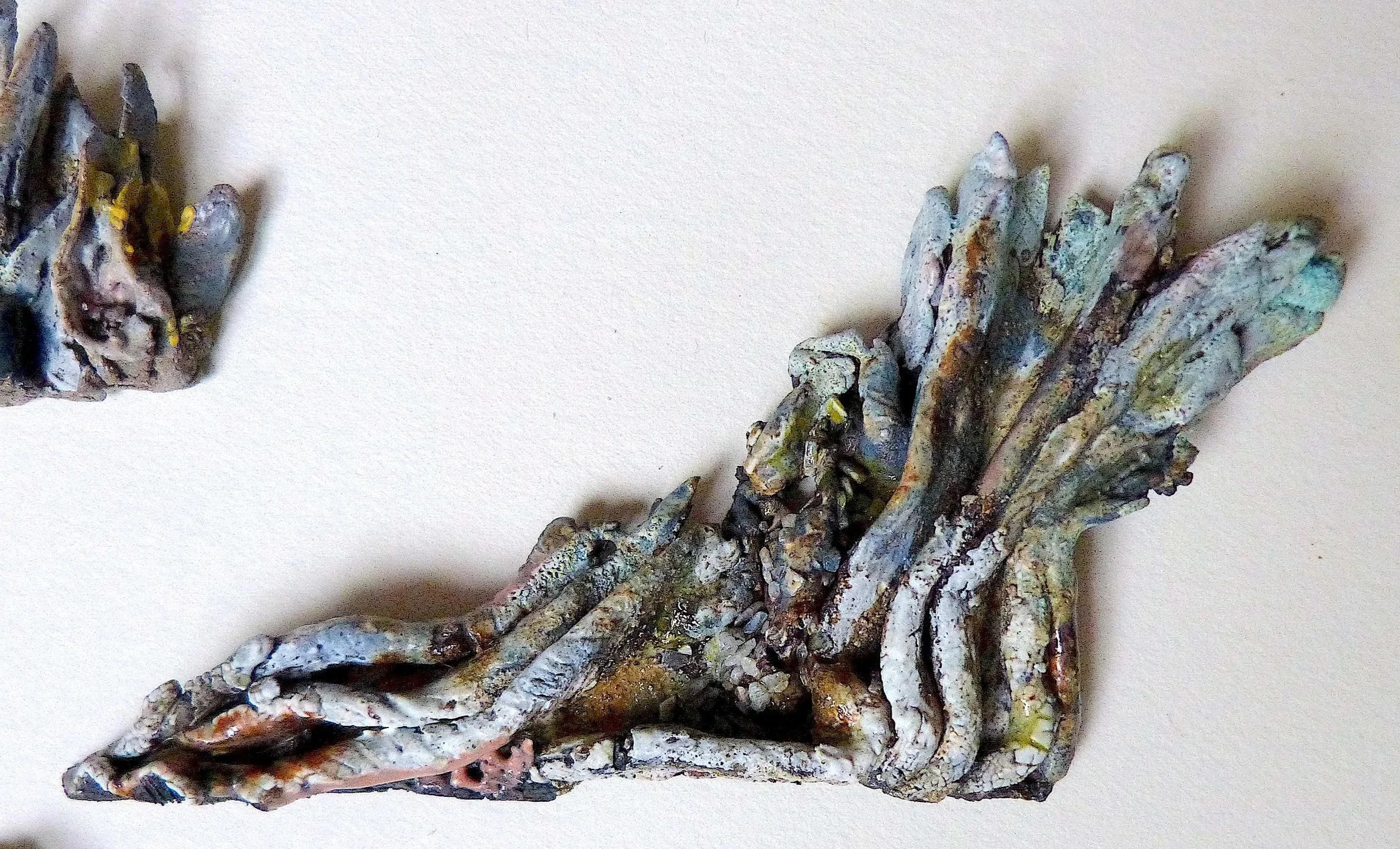
Hurkurs, 2024-5 (detail)
Stoneware and local clay, sand and glass, multiple glazes
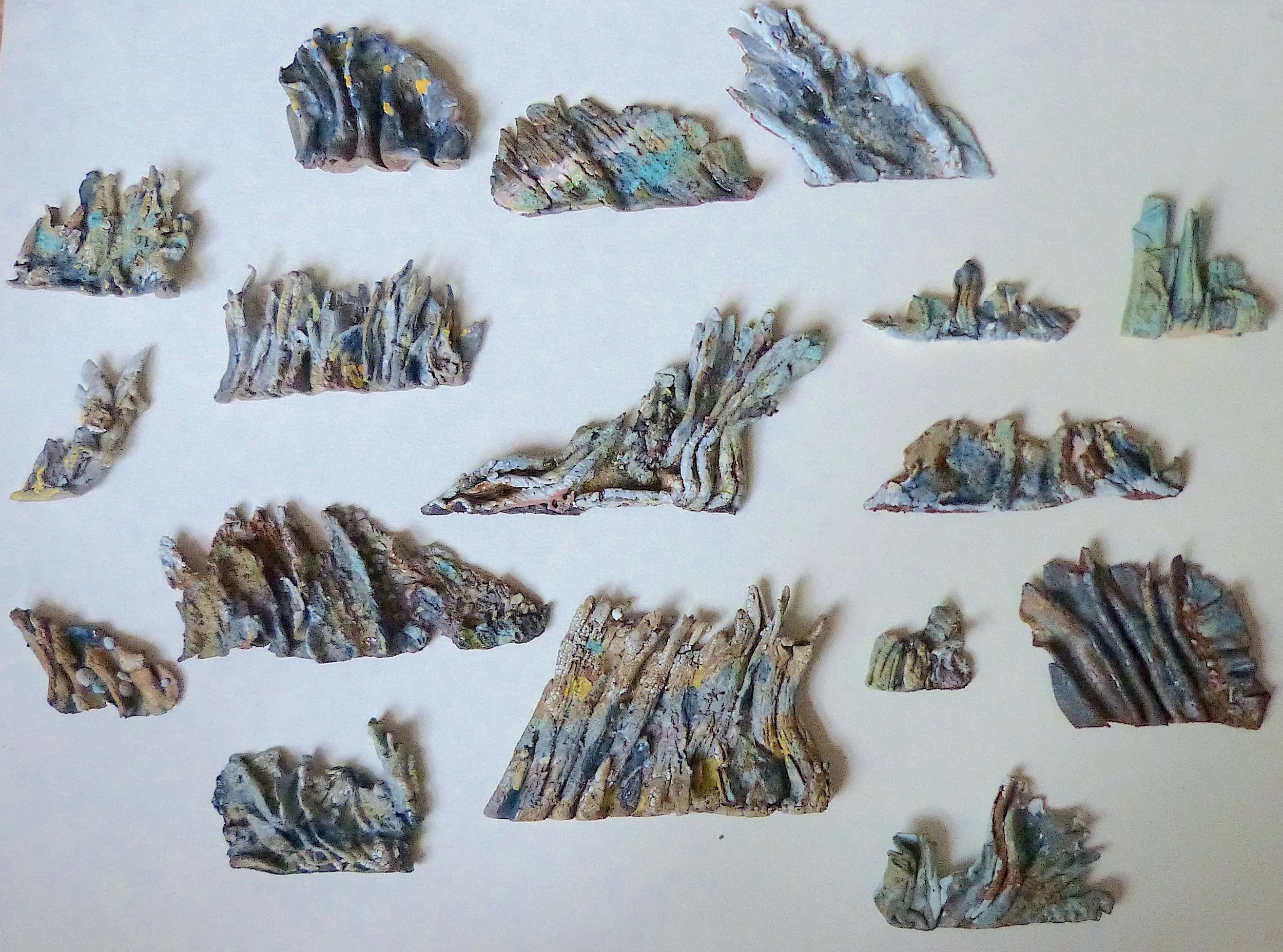
Hurkurs, 2024-5
Stoneware and local clay, sand and glass, multiple glazes
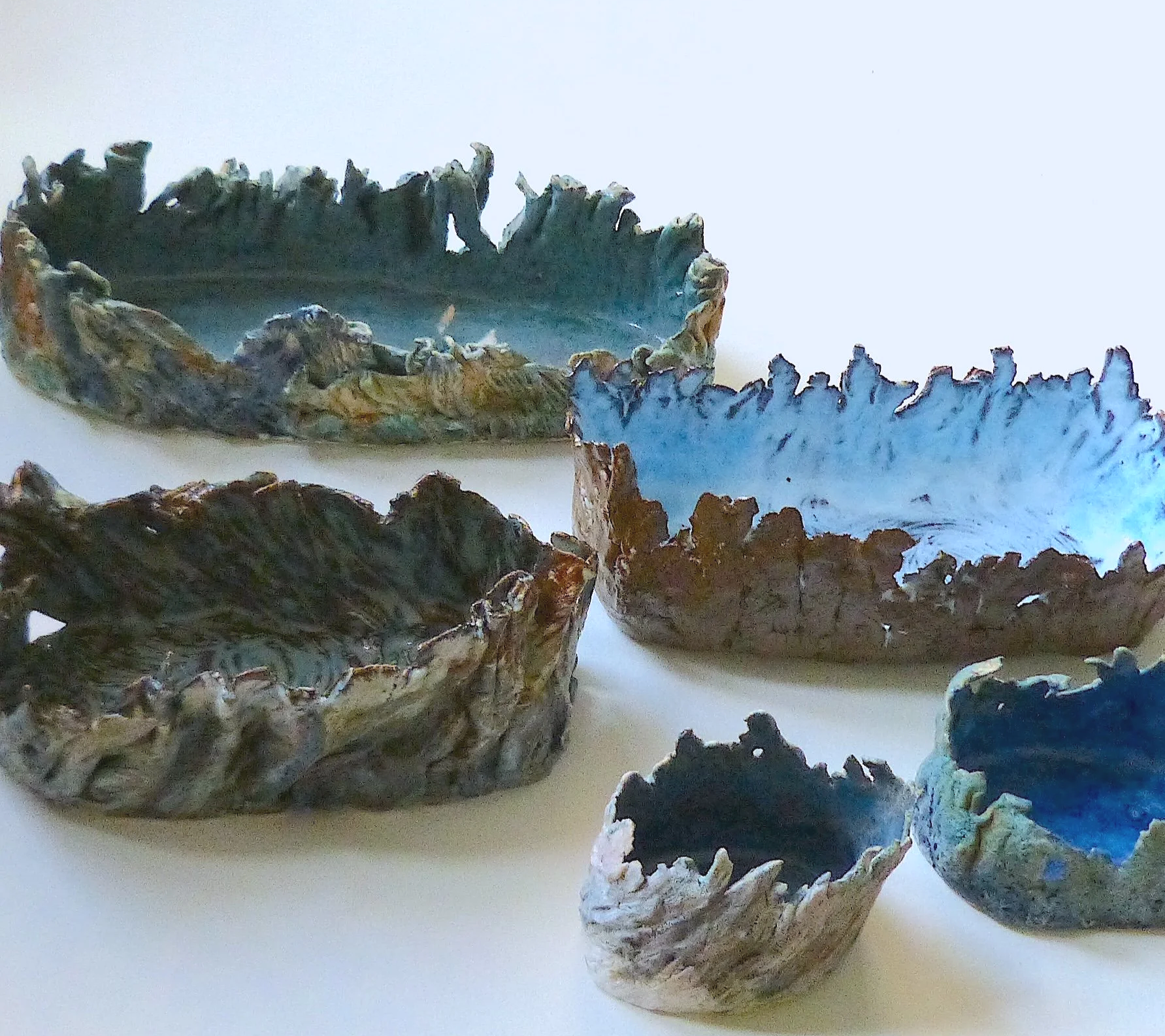
Hurkur Vessels I-V (top)
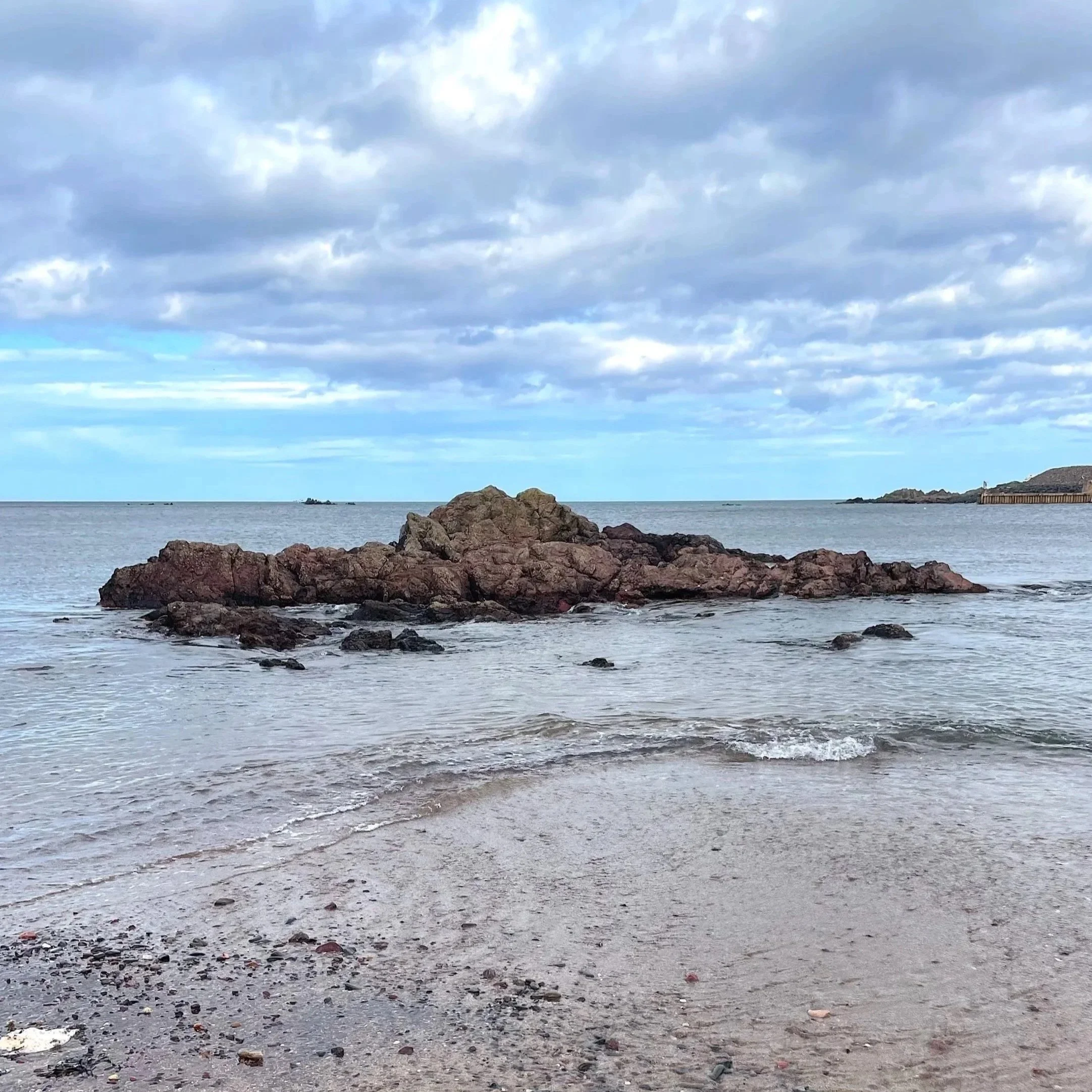
Eyemouth Bay (bottom)
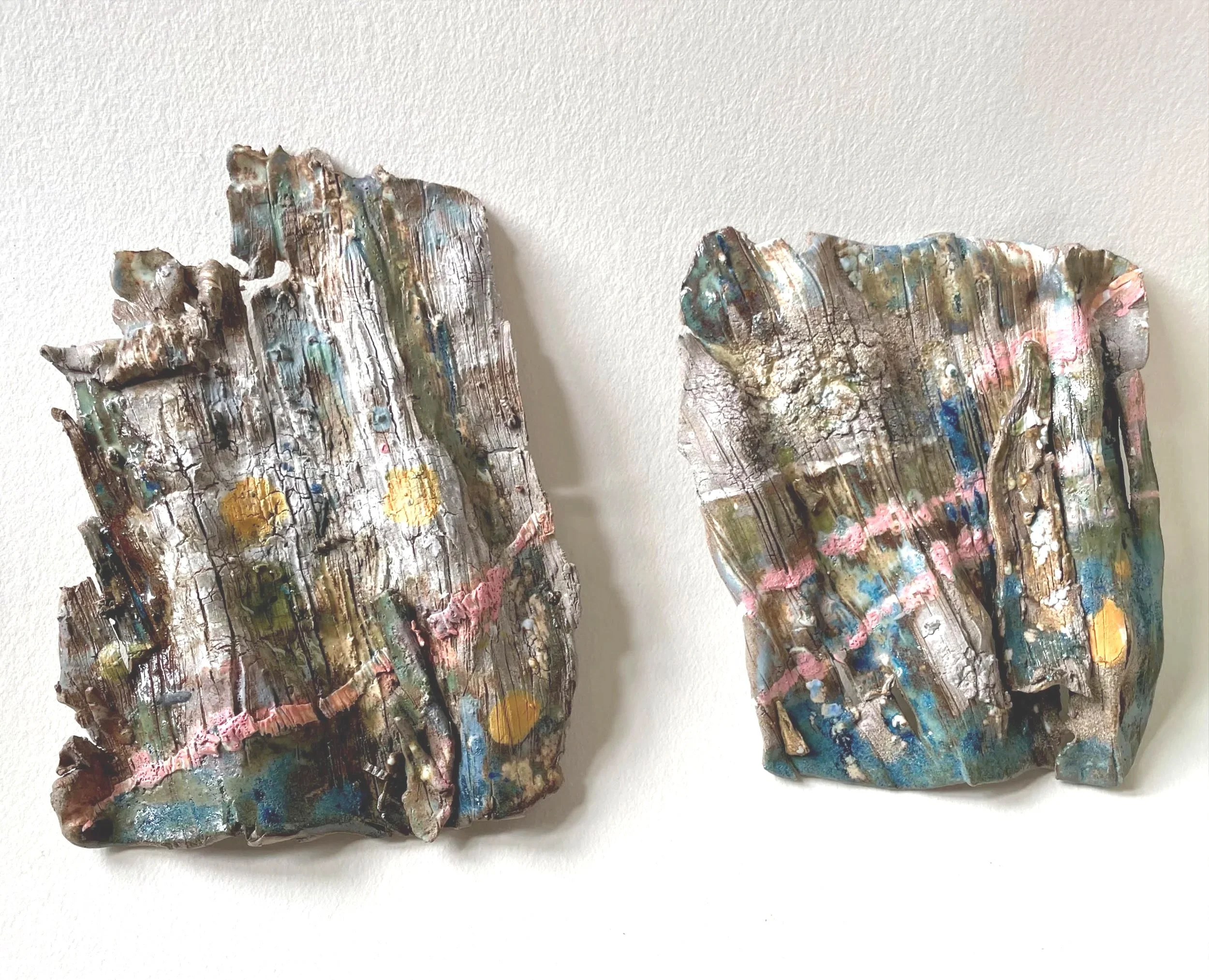
Nestends, Eyemouth, 2025
Stoneware and local clay, sand and glass, multiple glazes
Eyemouth is an extraordinary ordinary sort of town on the Berwickshire coast in the Scottish Borders, not far north of Berwick on Tweed.
In the Summer of 2024 I got to explore the Eyemouth museum, nearby coast and found local clay to work with. My great granny was born in Eyemouth and on Friday 14th October 1881, aged 5, she remembered being taken home from school as disaster struck. Almost the entire fishing fleet were capsized or smashed by enormous waves just as they returned to harbour. One boat, the Press Home was on its maiden voyage that day and was lost along with her big brother, after whom she would eventually name her son (my grandpa).
The story of The Eyemouth Disaster formed part of family- mythological in its horror and the unimaginably shocking loss. Through my own research during the pandemic I discovered that all the fishing families of Eyemouth were interrelated and how, not just two of my great granny’s brothers but nearly all the 129 fishermen who died that day were cousins of one sort or another.
As Peter Aitchison vividly describes in his detailed book “Black Friday’ the disaster was caused not just by the appalling weather event but a complex set of social, economic and cultural factors. These included wildly unfair church tithes, a fantastically rebellious fishing community who stood up to the authorities who in turn did not build the much needed harbour that would have mitigated the disaster. The Eyemouth fleet famously had a tradition ‘If one boat goes out we all go out’, so after a week of bad weather, ignoring the barometer, out they all went. Fishing folk are in close proximity to death (to this day it's one of Scotland’s most dangerous jobs) and as a result many folk practices, beliefs and customs are embedded in their daily activities, not unlike the mining folk of Fife who Great Granny would marry into one day…
Eyemouth Bay is usually placid, protected to some extent by the Hurkur rocks scattered across the mouth of the bay but their presence also poses risks for mariners and many of the ships lost in the disaster were dashed against them that day. They sit in the sea, their jaggy outlines appearing and disappearing with the tides; a constant reminder of the risk fishermen take as they leave and return to the now safe harbour. Part of my research involved exploring the geology of these coastal rock formations and the distinctive folded and faulted Silurian greywackes -these rocks are full of the palest shellpink calcite veins and covered in the deep saffron yellow lichens common along the coast. The geological description of them as folded and faulted because part of my making …The local clay is a deep terracotta red, echoing the local old sandstone cliffs of Fort Point to the north side of the bay.

Hurkur Vessel (Pink Calcite)
Porcelain, Eyemouth Clay, multiple glazes